
Building a Multi-Tenant Production System for Offichef
Tenant
Isolation
AI Document
Processing
Client
Ownership
Solutions
Industries
Technologies

About the Project
Offichef worked. It read supplier invoices, costed recipes, and tracked weekly profitability for a restaurant, and it did that well for one operator. The problem was everything under the hood: a spreadsheet backend, a nightly email script someone had to restart, and food-cost logic spread across workbooks. None of that safely serves many restaurants at once. Spiral Scout kept the proven Offichef logic and rebuilt the foundation beneath it as a multi-tenant production system. Each restaurant now gets a fully separated workspace. Invoices, payroll, and recipes are read by AI and checked before anything is saved. Recipe costs update on their own when ingredient prices move. The outcome is a system built to grow past a single restaurant and to be owned and run by Offichef.
Objectives
- Give every restaurant a fully separated workspace, so one operator can never see another’s suppliers, recipes, or margins.
- Read supplier invoices, payroll, and recipes automatically, while making sure a bad read becomes a quick review task and never a wrong number on the books.
- Update recipe and sub-recipe costs on their own whenever an ingredient price changes.
- Keep a clear, per-restaurant record of every action, whether taken by a person or an automated job, usable as an audit trail.
- Move the existing Offichef system off spreadsheets onto the new foundation with the features operators already rely on kept intact.
- Hand over a system Offichef owns and a small team can run, without depending on Spiral Scout day to day.

Challenges
Solutions
One restaurant’s data must never reach another’s
Spreadsheets keep everything in one shared place. For a product serving many restaurants, that is a non-starter: a single mistake could expose one operator’s suppliers, pricing, and margins to another. Relying on the system to remember to keep accounts apart is the approach that tends to fail in practice.
Separation built into the data itself
Offichef’s accounts are kept apart at the foundation level rather than by the application. Records are structured so that one restaurant’s data simply cannot connect to another’s. The separation holds even if a check is ever missed higher up, because the data model does not allow the crossover in the first place.
AI that reads documents without quietly getting the numbers wrong
Supplier invoices come in as PDFs, phone photos, and messy line items. AI is good at reading them and unreliable at the math that turns a line item into a cost per ounce. An overconfident wrong number could silently throw off every recipe that uses that ingredient.
Read with AI, calculate with rules, and check before saving
Offichef uses AI to pull the structured details off each document, then does the actual math with fixed rules rather than trusting the model to divide. Before any price is saved, the system checks it against sensible limits and against the last price paid. If something looks off, the price is held back and flagged for review while the rest of the invoice is still saved. Nothing is committed until a person confirms it. The same read-with-AI, verify-with-rules approach carries across payroll and recipe import, so a bad read becomes a review task, not a corrupted cost sheet.
A single price change has to flow through nested recipes
Offichef recipes build on sub-recipes, which build on other sub-recipes. When one ingredient gets more expensive, every dish that depends on it needs to recost, several layers up if necessary. Doing that by hand, or all at once inside the invoice step, is slow and fragile.
Сosts that update themselves in the right order
When a price changes, the system quietly recosts each affected recipe, then works its way up through the recipes that build on it, one level at a time and always in the correct order. It is safe to repeat and it protects against recipes that accidentally reference each other in a loop. Operators see current food-cost percentages without anyone recalculating anything.
Keeping the system simple enough to own
The original plan leaned on heavy machinery for every routine save. It would have worked, but it was more complexity than the job needed, and complexity is what a small team later has to maintain.
One clear path, judgment applied
Spiral Scout simplified the everyday workflow to a single, predictable save path while reserving the heavier, multi-step automation for the one job that actually needs it, the bulk recipe import. The result is a system an in-house team can actually reason about, which matters more than any single clever mechanism.

Project Strategy
Spiral Scout builds for what a system costs to own, not just what it costs to stand up in the first week. The Offichef work was sequenced so the existing logic was understood before anything was rebuilt, the restaurant know-how was written down as real rules rather than left in someone’s head, and the finished system was left in Offichef’s hands.

Understand What Already Works Before Rebuilding
The team went through the existing Offichef code, spreadsheets, and costing workbooks in full to capture every rule and calculation the prototype had already proven. This discovery step produced a plain-English plan and a clear map of what to reuse, what to rebuild, and what to add. Nothing was rebuilt until that plan was approved.

Turn Restaurant Know-How into Real Rules
Logic that lived in a founder’s head and in spreadsheet formulas became clear, testable rules: how units convert, when a price looks wrong, which invoice lines to skip, how credits are handled. Written down this way, the knowledge no longer walks out the door and does not quietly drift over time.

Build for Self-Reliance
The system was built the same way Spiral Scout approaches modernizing older platforms: one clear place for data to flow through, no hidden shortcuts, and a setup a new engineer can pick up. The Offichef system and its business logic belong to Offichef.
Project Results and Impact
Offichef went from a single-restaurant spreadsheet tool to a multi-tenant product with capabilities it did not have before: separated workspaces per restaurant, AI document reading with a human check, automatic recipe recosting, and a clear per-restaurant record where every action is transparent and trackable. This is a long-term bet on the foundation, built to carry many restaurants and to be maintained by a small team.
Tangible Outputs:
– A multi-tenant database that keeps each restaurant’s data separated at the foundation level.
– One clear, reliable path for saving data, with no hidden routes around it.
– An automatic activity record for each restaurant that tracks every action, by any user or automated job, and doubles as an audit trail.
– AI-assisted processing for invoices, payroll, and recipe import: read the document, calculate with fixed rules, match to the catalog, catch duplicates, and hold anything questionable for review.
– A bulk recipe import that captures how recipes relate to one another, where one recipe can be an ingredient in another, and that a person reviews before anything is committed.
– Recipe costs that recost themselves through nested recipes when prices change.
– Secure login with per-restaurant access.
Key Takeaways
- The Judgment Built In: The win is not that a spreadsheet became a system. It is the judgment built in: separation that cannot be bypassed, AI arithmetic replaced with dependable rules, recipe costs that stay correct on their own, and a system where every action is transparent and trackable. That is the difference between a demo and a system that holds up when many people use it at once.
- Transferability: Any founder turning a proven single-user tool into a real product hits the same three problems: keeping accounts truly separate, making sure AI does not quietly corrupt data, and keeping calculated numbers correct as inputs change. The approach used for Offichef carries directly to other operational products.
- The Independence Metric: Offichef was built to be owned. One clear data path, written-down rules, and a system that can rebuild its own reporting mean a small in-house team can run and extend it. The system and its logic belong to Offichef.
Worth a conversation if you’re building a multi-tenant SaaS product on top of a proven prototype and want a second set of eyes before the architecture hardens? Get in touch

Related Projects
-
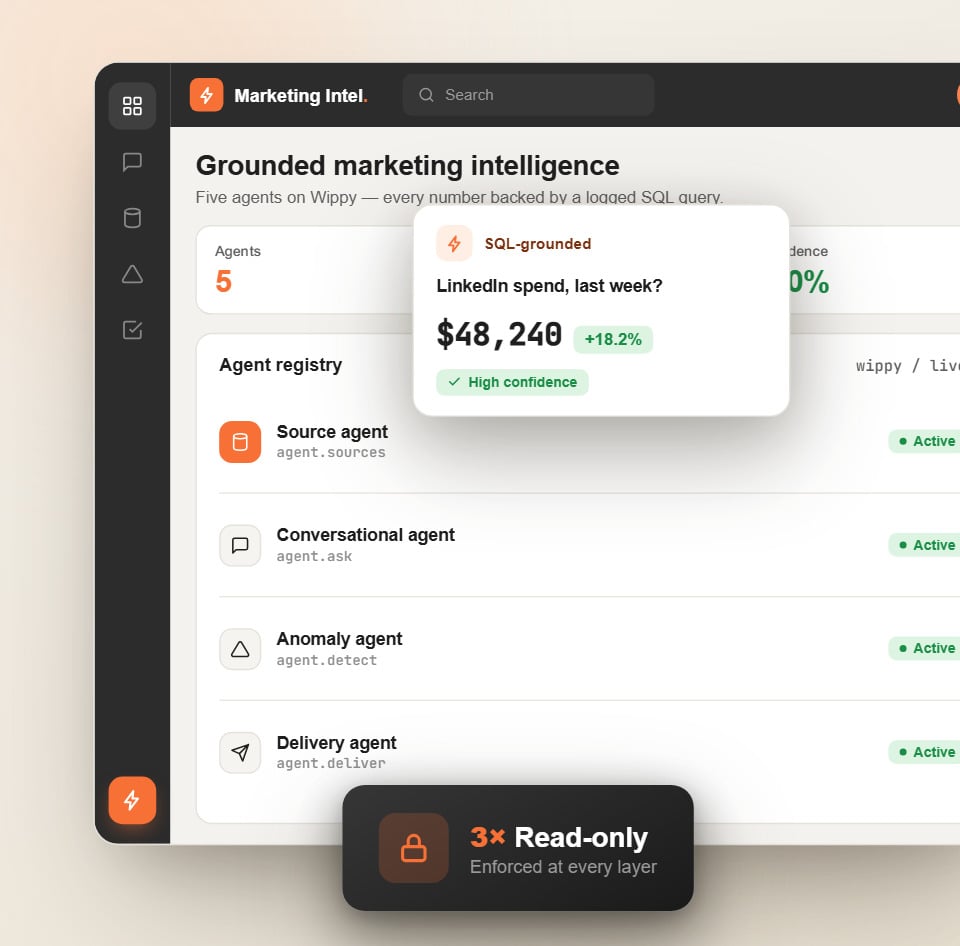
Marketing Operations Intelligence Agent System
LinkA read-only agent system that turns five fragmented marketing data sources into daily answers, every number backed by a logged query.
-
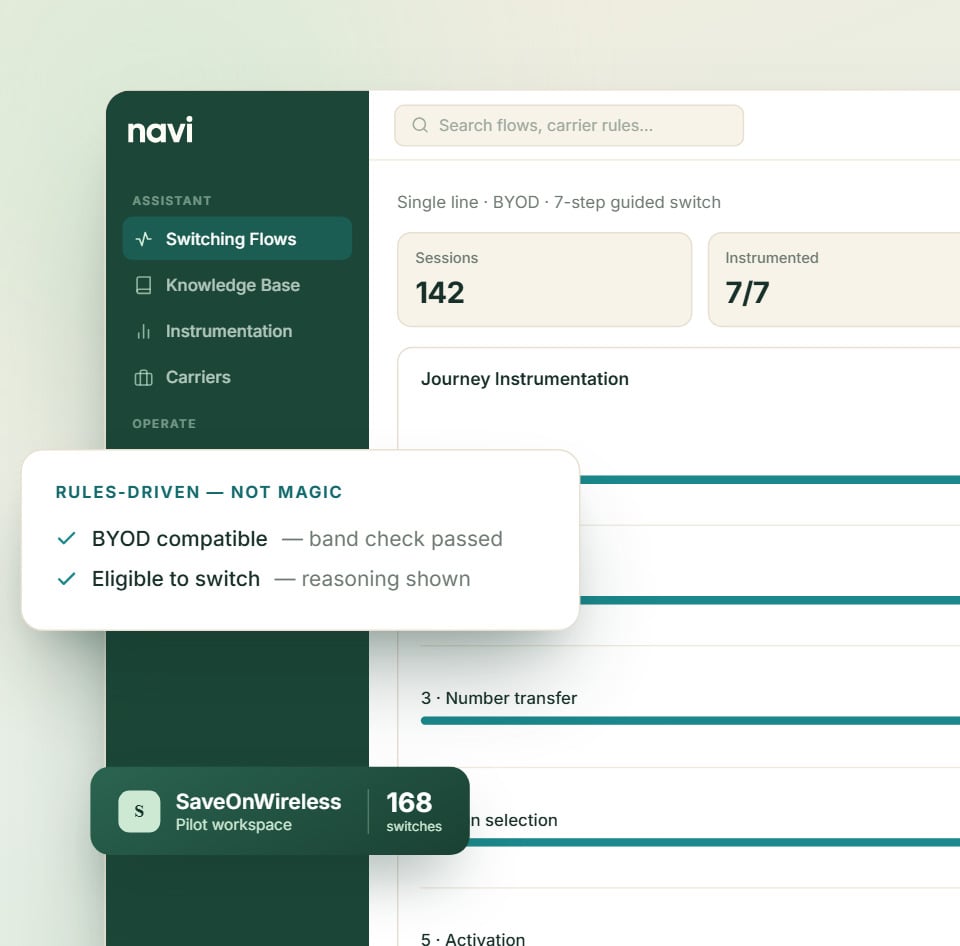

Agent-Driven Conversion Infrastructure for a Telecom Intelligence Platform
LinkSpiral Scout built a post-decision switching assistant that keeps Navi present at the moment users most often abandon.
-
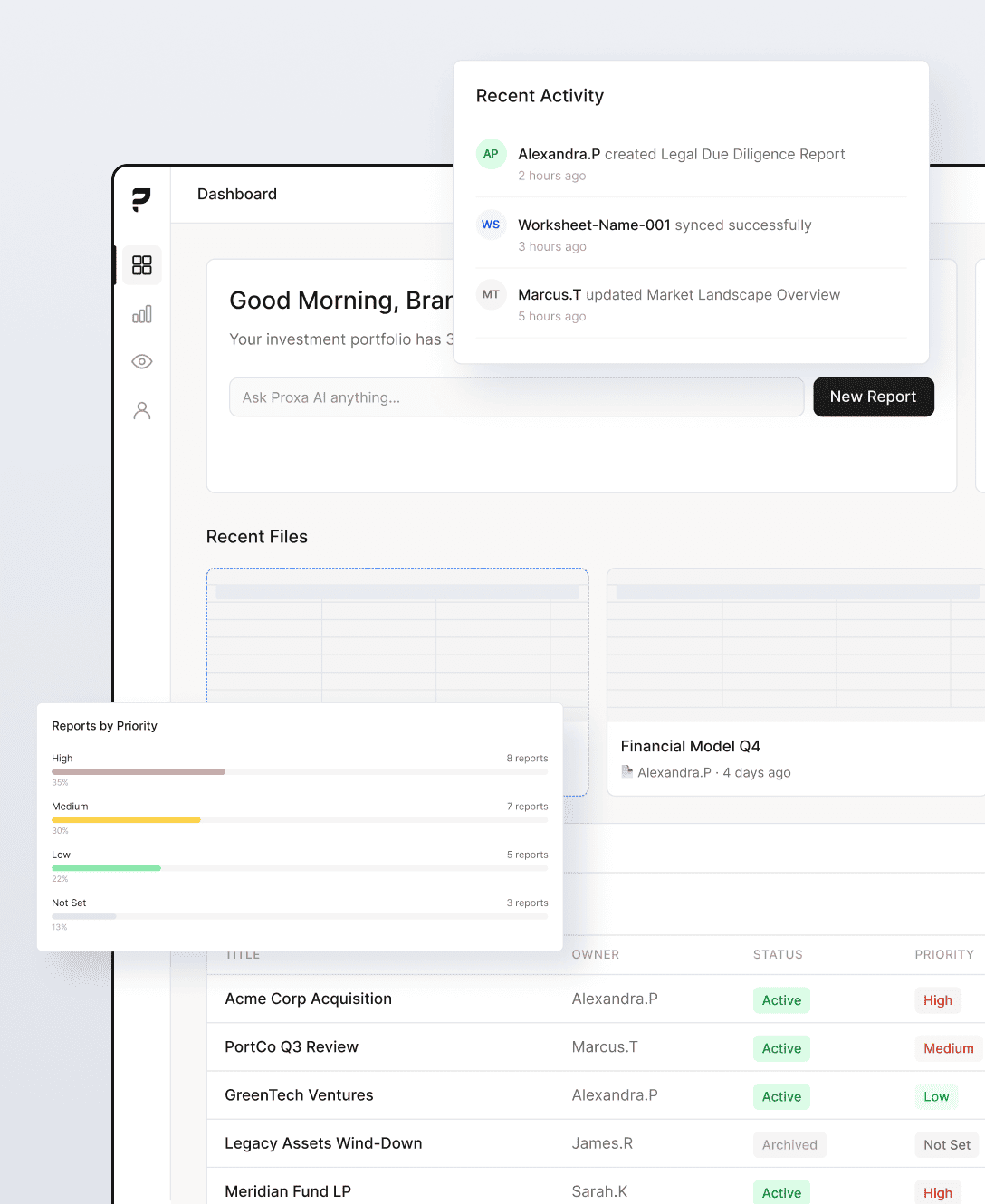

Agent-Driven AI Data Hub with Grounded Executive Reporting
LinkGrounded AI retrieval, generative reporting, and conversational search for an executive data hub. Trusted answers. Stack owned by their team.
-
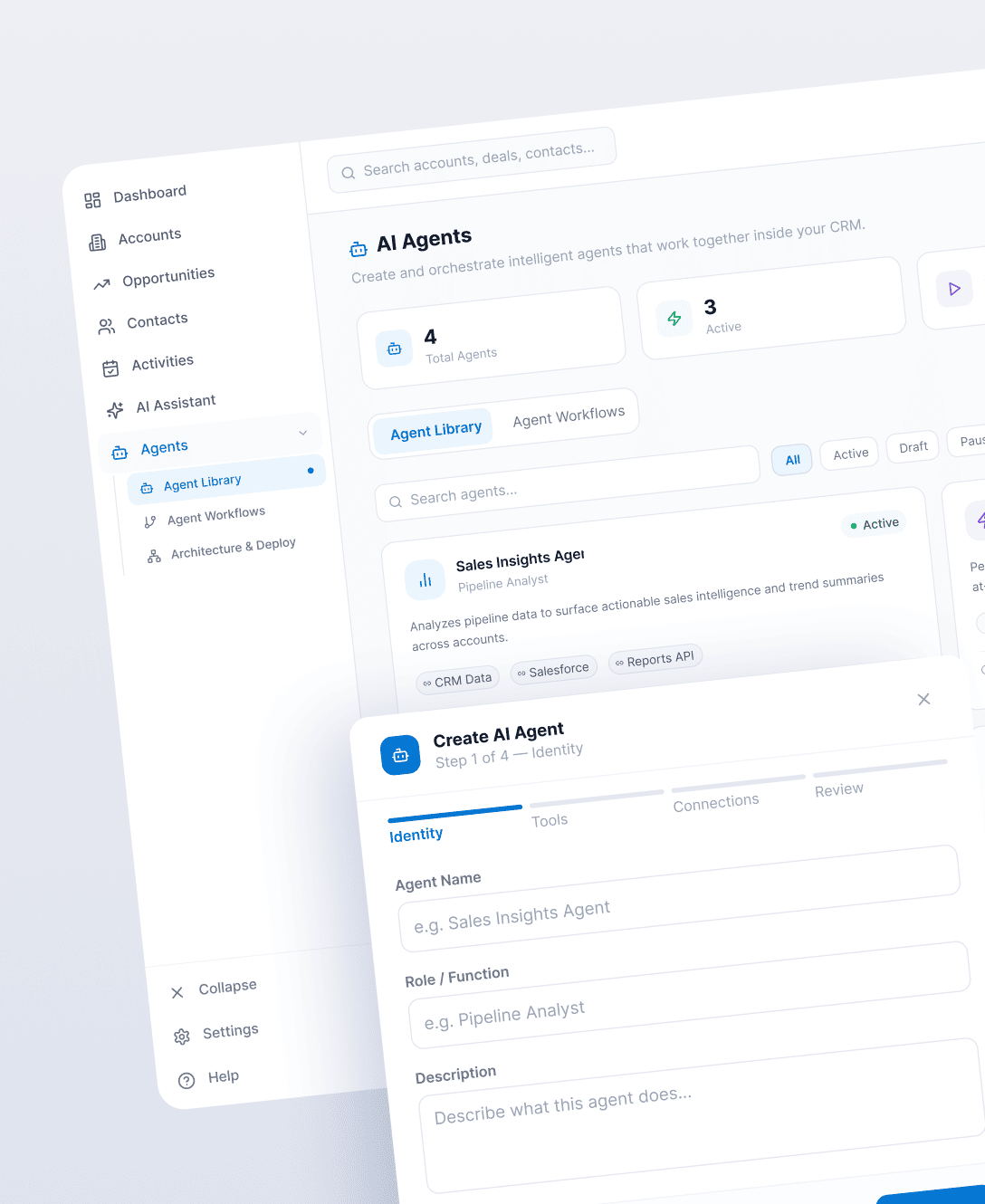
Conversational CRM Agent Orchestration for Salesforce-Native SaaS
LinkShipped a resilient multi-agent architecture that turns complex Salesforce CRM data into a conversational interface for sales teams.
-
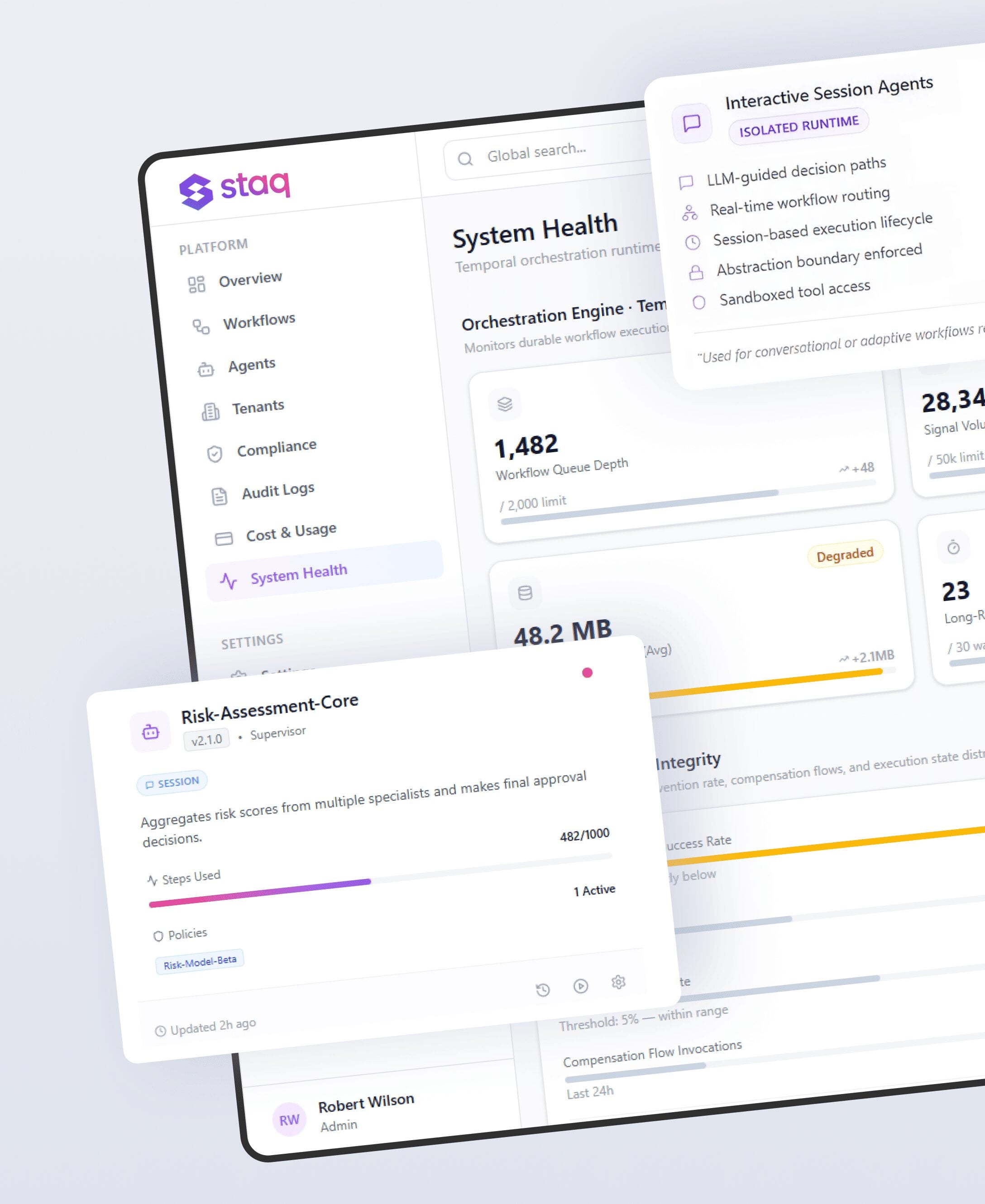

Agentic Workflow Orchestration for Autonomous Banking Infrastructure
LinkArchitected a Temporal-backed agentic runtime for a fintech platform shipping autonomous financial workflows to regulated markets.
-


Designing Agentic Control Systems for Data Integrity & Financial Readiness
LinkEngineered a configuration system replacing tribal knowledge with enforced rules, deployed to distributors without IT drag.


Have a Similar Platform to Build? Let’s Discuss.
Meet the founders
Tell us your goals
Receive a proposal
Project kickoff

John Griffin
Co-Founder, CEO

Anton “JD” Titov
Co-Founder, CTO
“Anton is an exceptional technologist. I would feel comfortable having him work on any technical challenge.” – Ryland Goldstein, Head of Product, Temporal


