Building a Reliable, Workflow-Driven Production System for an Enterprise Data Platform
Temporal
Runtime
Workflow
Decomposition
Naming
Conventions
Solutions
Industries
Technologies

About the Project
An enterprise data services company was building a workflow engine from scratch on top of Temporal. The product is a visual editor that lets different departments wire their existing services together and build more complex automations without writing orchestration code each time. Think of it as an n8n-style tool operating inside a large enterprise, with the reliability guarantees that scale demands. The client had strong architects in-house, but the long-term behavior of the system, specifically how it would hold up as complexity grew, raised questions that warranted an expert review. Spiral Scout shipped the architectural judgment and plan, not the code. The result is a system the client’s team owns, operates, and has been running in production for roughly one year.
Core Objectives
- Ship a scalable visual workflow editor on top of Temporal
- Establish naming and integration conventions that hold up as the system grows
- Model workflows with the right decomposition for long-term maintainability
- Address Temporal-specific concerns including workflow addressing and interceptors
- Enable disparate internal teams to write modules against a consistent protocol
- Leave the client’s architects fully capable of extending the system on their own

Challenges
Solutions
Long-Term Architecture Under Growing Complexity
The client’s team could build a visual editor, but the product’s complexity was climbing. They had specific questions about how the architecture would behave over time and design decisions that, if wrong, would be expensive to undo later.
Architectural Consultation Grounded in Prior Production Work
We walked through the architecture in depth with the client’s team, working through decomposition, workflow modeling, Temporal addressing, and the conventions that hold the system together. The consultation drew directly from experience building Wippy, a comparable workflow runtime, which meant the tradeoffs being discussed were already understood from real production constraints.
Disparate Teams Writing Modules Without a Shared Protocol
Multiple teams at the client needed to contribute modules to the system. Without shared conventions, the product would fragment as it grew.
A Written Set of Naming and Integration Conventions
We produced the conventions for naming and connecting the system together: how things should be named, how streams should combine, and how modules should plug in. The client’s team then applied those conventions themselves, giving every contributing team the same playbook.
Temporal-Specific Runtime Concerns
The team needed guidance on interceptors and the ability to pause workflows, the kind of details that determine whether a Temporal system holds up at scale.
Targeted Guidance with Small Code Examples
We addressed these with direct technical guidance and best practices drawn from our production experience, including small code examples where useful. The client’s architects made the final calls and owned the implementation end to end.
Workflow Decomposition With No Established Pattern
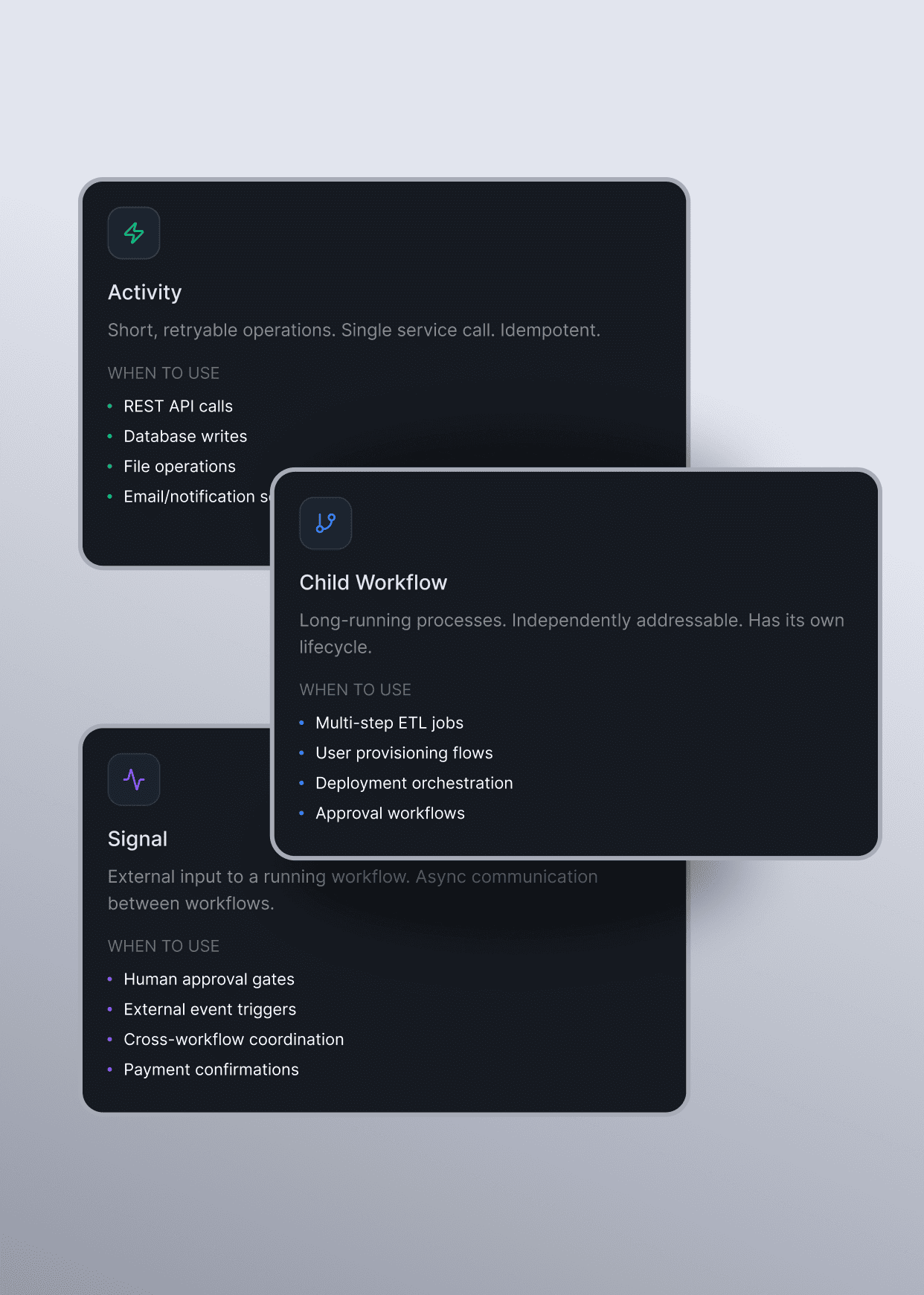
A visual workflow editor built on Temporal gives teams a lot of surface area to make decisions. Without a clear decomposition model, individual teams would make different structural choices about how to break workflows into activities, when to use child workflows versus signals, and how to handle long-running processes. Those inconsistencies compound quickly and become expensive to unwind once the system has multiple contributors and production traffic.
A Documented Decomposition Model Built for Long-Term Behavior
We worked through the decomposition approach with the client’s team directly, establishing how workflows should be structured for the specific constraints of their system, including how long-running processes should be modeled and where the boundaries between workflow logic and activity logic should sit. The output was a documented model the team could apply consistently across the product, independent of which team was contributing a given module.
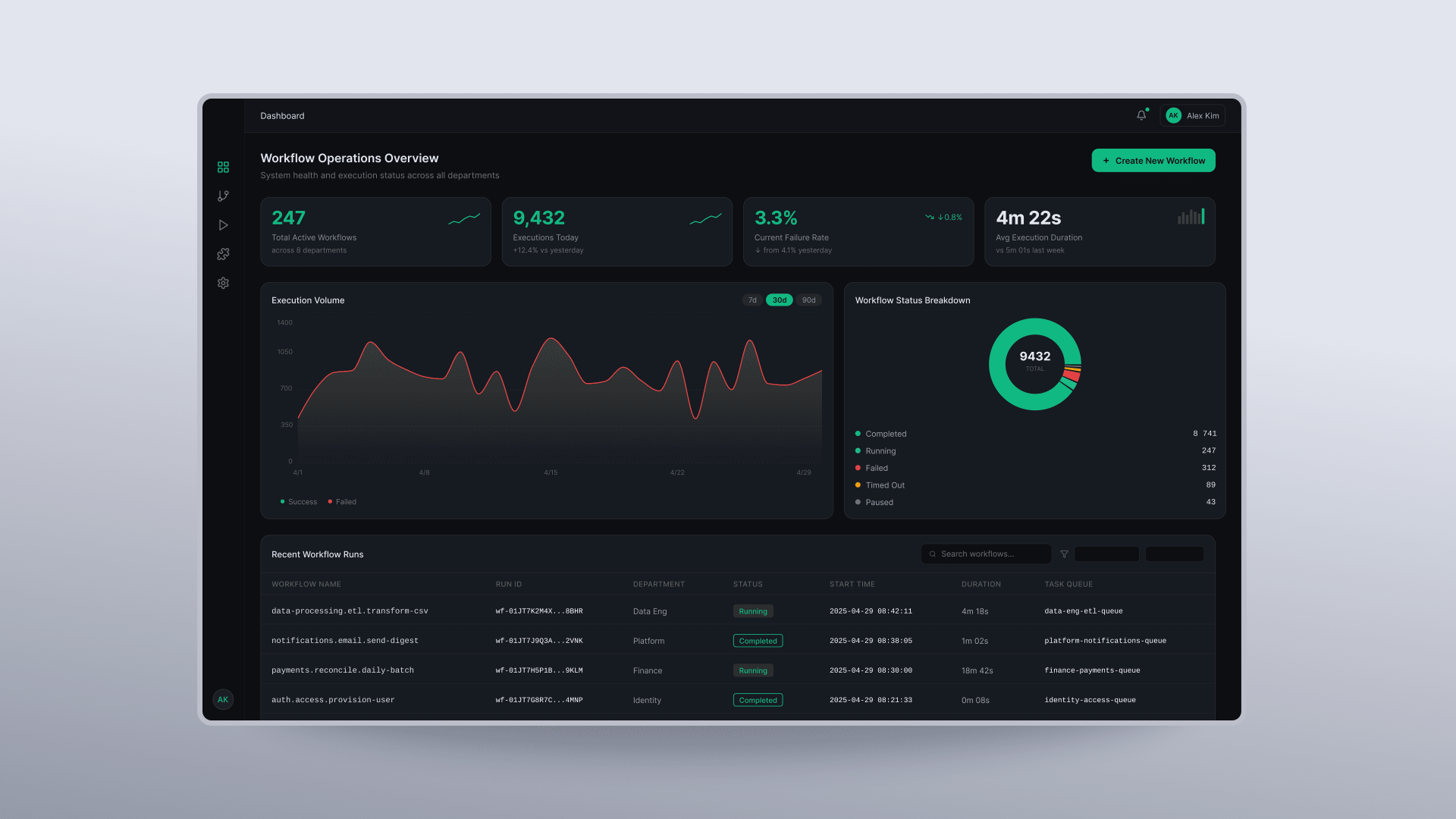
Strategy
Spiral Scout’s approach on this engagement was consulting with the depth of a builder. The guidance came from production judgment, not theory, because we had already shipped a comparable runtime in Wippy.
De-risking the architecture
The most expensive mistakes in a workflow engine are architectural ones made early. The work focused on decomposition and long-term design decisions before the system hardened around them.

Tradeoffs, not prescriptions
We walked through the options with the client’s architects, flagged where things would break under long-term constraints, and let the in-house team make the final calls. Every decision was documented and explained so the team could extend the system without further outside development help.

Built for client independence
We wrote no production code. The client’s team owns every line of the system. That was the explicit end goal from the first conversation.
Project Results and Impact
What exists now is a workflow engine the client’s team designed, built, and runs independently, with an architectural foundation stress-tested by a team that had already shipped similar work. Roughly one year into production, the system continues to operate as intended. The consulting engagement compressed what would have been months of internal debate and costly architectural pivots into a focused review that gave the team a clear, documented path forward.
Tangible outputs:
– Architectural guidance for a Temporal-based visual workflow editor
– Naming and integration conventions adopted across contributing teams
– Decomposition and workflow modeling approach for long-term system behavior
– Targeted guidance on Temporal addressing, interceptors, and pause semantics
– A product owned and operated entirely by the client’s internal team
Key Takeaways
- Architectural consulting only pays off when the advisor has already shipped the same kind of system. The experience of building Wippy, a production workflow runtime, was what made the guidance on this engagement actionable rather than theoretical.
- The most valuable work on a workflow engine happens before any orchestration code is written. Decomposition, naming, and long-term behavior decisions made early determine whether the system survives its own growth.
- Shared conventions are what let multiple internal teams contribute modules without the product fragmenting under its own weight.
- Client independence was the explicit end goal from the start. No production code was written on the client’s behalf. Their team owns every line of the system.
Worth thinking about if you’re building a workflow orchestration product on Temporal and want a second set of eyes before the architecture hardens.

Related Projects
-

Multi-Tenant Platform Architecture for a Restaurant Costing System
LinkOffichef went from a single-restaurant spreadsheet tool to a multi-tenant system built to run for many operators at once.
-
Marketing Operations Intelligence Agent System
LinkA read-only agent system that turns five fragmented marketing data sources into daily answers, every number backed by a logged query.
-
Agent-Driven Conversion Infrastructure for a Telecom Intelligence Platform
LinkSpiral Scout built a post-decision switching assistant that keeps Navi present at the moment users most often abandon.
-

Agent-Driven AI Data Hub with Grounded Executive Reporting
LinkGrounded AI retrieval, generative reporting, and conversational search for an executive data hub. Trusted answers. Stack owned by their team.
-
Conversational CRM Agent Orchestration for Salesforce-Native SaaS
LinkShipped a resilient multi-agent architecture that turns complex Salesforce CRM data into a conversational interface for sales teams.
-
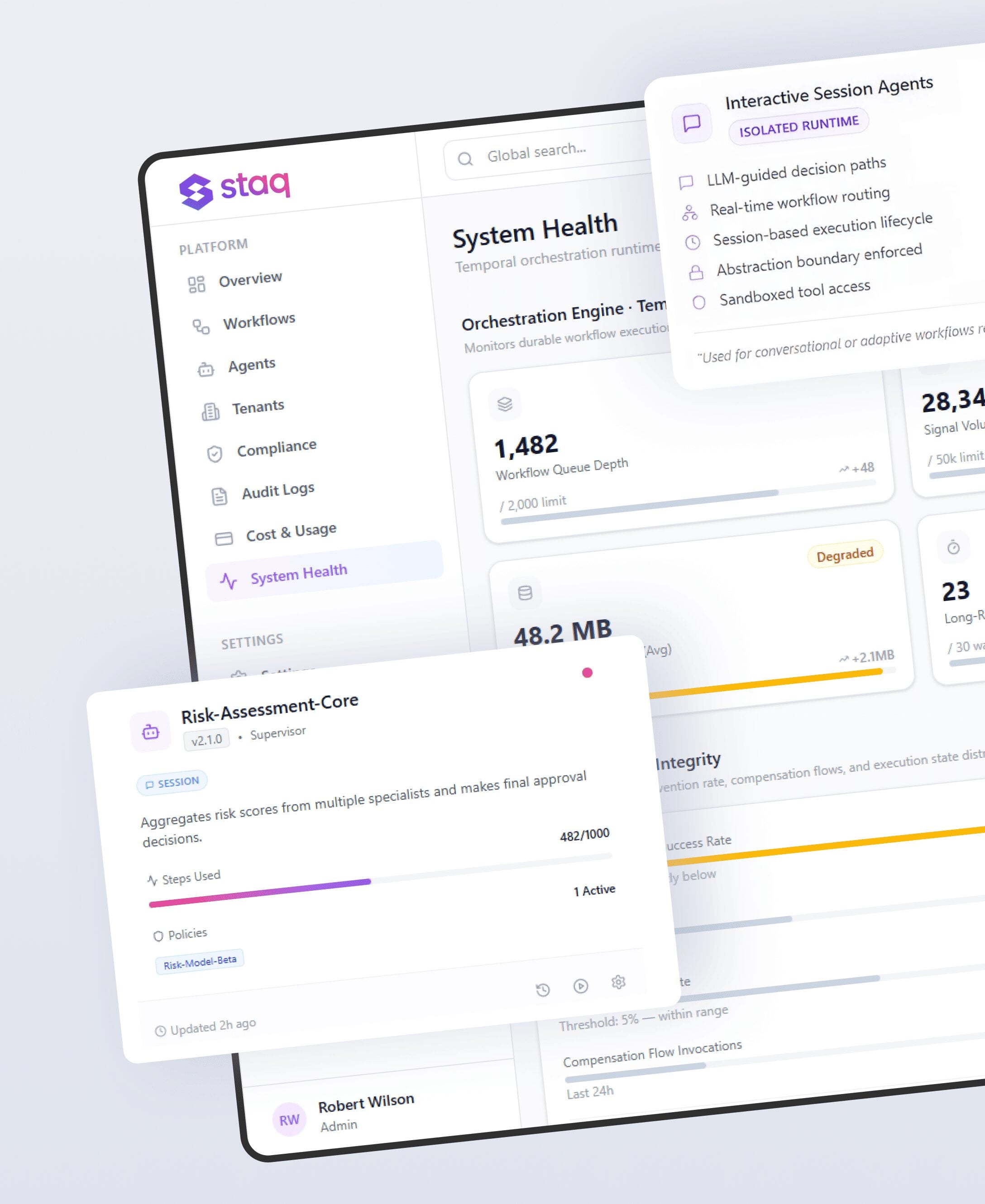

Agentic Workflow Orchestration for Autonomous Banking Infrastructure
LinkArchitected a Temporal-backed agentic runtime for a fintech platform shipping autonomous financial workflows to regulated markets.


Architecture That Holds as Your Workflows Grow
Meet the founders
Tell us your goals
Receive a proposal
Project kickoff

John Griffin
Co-Founder, CEO

Anton “JD” Titov
Co-Founder, CTO
“Anton is an exceptional technologist. I would feel comfortable having him work on any technical challenge.” – Ryland Goldstein, Head of Product, Temporal


